Best Industrial Design Competitions for Students
A guide to competitions worth entering as a design student

For design students, competitions can be a useful way to get your work in front of juries, design professionals, and potential employers. But they don’t all work the same way: some are free, some require a physical prototype, and others are mainly valuable for the recognition they give your work.
We picked seven competitions that cover that range, from completely free student awards to established international programs.
1. iF Design Student Award
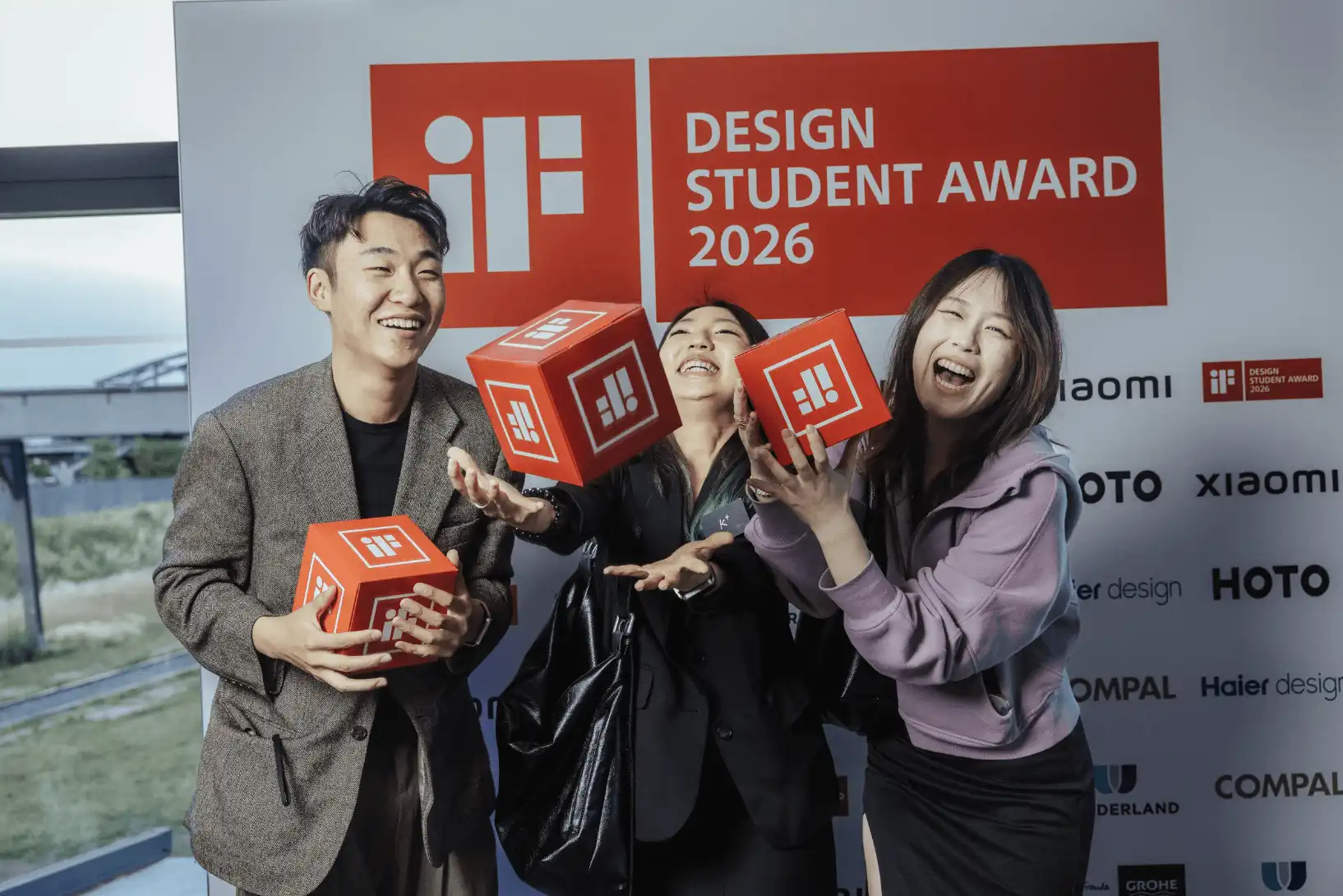
The iF Design Student Award is one of the most accessible international design competitions for students. Entry is completely free, and you don’t need to build or ship a physical prototype. A project description, images, and presentation poster are enough to enter.
The award offers €50,000 in total prize money, alongside international exposure and publication on the iF platform.
Good for: strong student projects that aren’t yet prototyped.
2. Design Intelligence Award (DIA)
The Design Intelligence Award is a large international competition based in China, and entry is free. Students can enter through the Concept Group, which includes dedicated Future Talents and Young Talents awards with their own prize money.
Finalists may need to develop a physical prototype and ship it to China for evaluation, so the competition can become more expensive later in the process.
Good for: technology, product and manufacturing-oriented concepts, especially if you’re interested in the Chinese design and industry scene.
3. Core77 Design Awards
The Core77 Design Awards are paid to enter, but students have their own categories and discounted entry fees. Your work is judged separately from professional entries across most categories.
There isn’t a major cash prize. The main benefit is having your project recognized and published through Core77 and its wider design community.
Good for: portfolio visibility, publication and recognition within the professional design community.
4. Red Dot: Design Concept
Red Dot: Design Concept is aimed at ideas and concepts rather than only finished products. Its Next Gen category is specifically for university teams and designers under 30, and projects can still be at the idea or prototype stage.
Entry is paid, and winning also comes with a mandatory Winner’s Package fee. The Peter Zec Prize awards SGD 10,000 (roughly €6,850) to one standout Next Gen project, while winners also receive international presentation through the Red Dot platform and exhibitions.
Good for: students with a polished concept who want a major international design award on their portfolio.

5. Andreu World International Design Competition
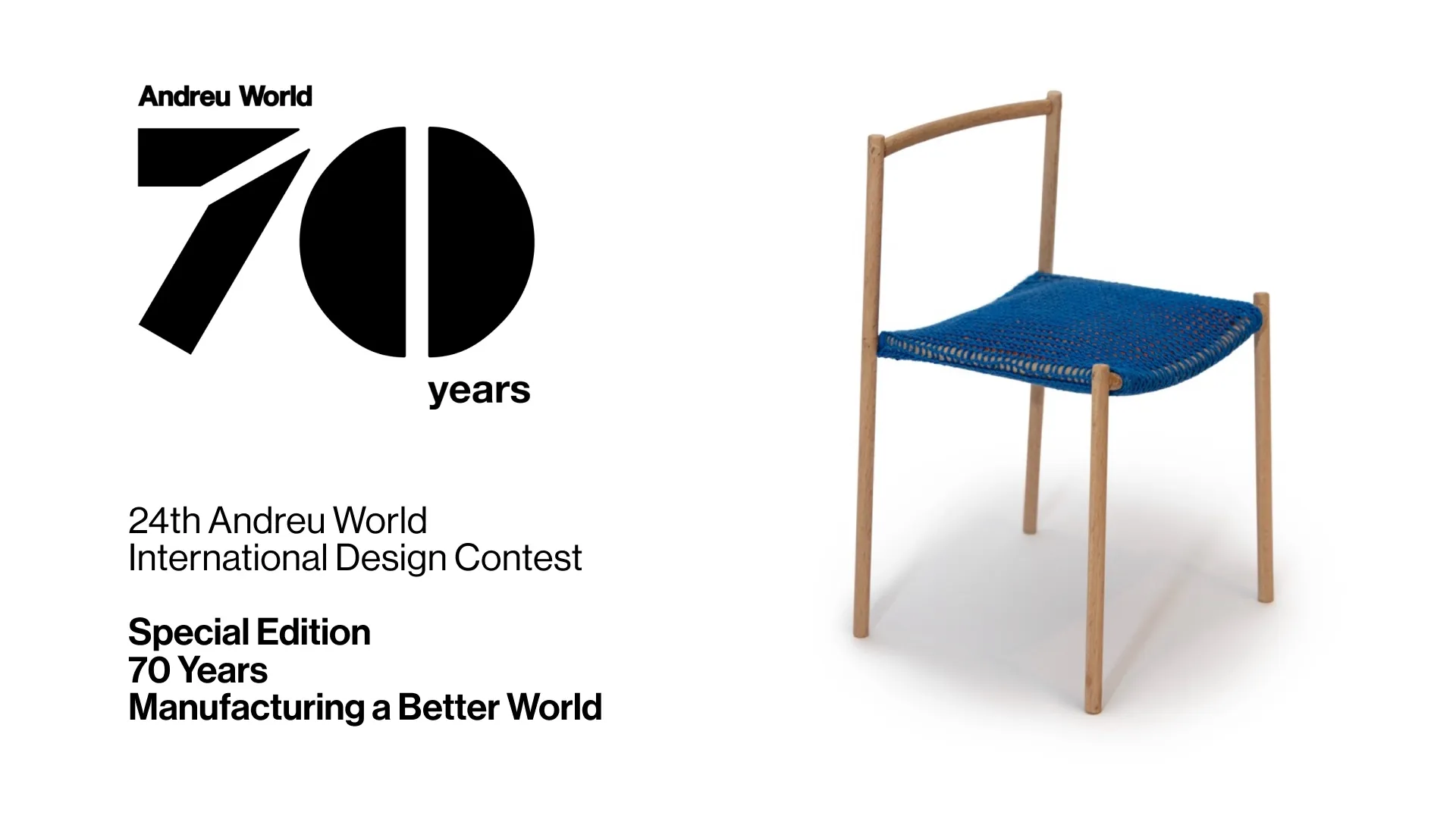
If you’re interested in furniture, this competition is much more specific than a general design award. The brief is always a chair and/or table, including formats such as armchairs, stools, benches, sofas and different types of tables.
Entry is free, but you need a physical prototype, typically at 1:5 scale. The current edition offers €5,000 for first place, €2,500 for second, and three special mentions. Prototype transportation, insurance and customs costs are not covered.
Good for: furniture and seating projects where you already have a physical prototype.
6. German Design Award Newcomer
The German Design Award Newcomer works differently from the others: you cannot apply directly. Students and recent graduates have to be nominated through participating universities affiliated with the German Design Graduates initiative.
Five finalists are selected, with the winner receiving €15,000. Participation is free, and finalists also get opportunities to connect with the German design and business community.
Good for: graduating students whose university participates in the nomination program.
7. James Dyson Award
The James Dyson Award is aimed at projects that solve a real problem through product design and engineering. Entry is free and open to current university students and recent graduates in fields including product and industrial design.
The major requirement is a functioning prototype. The International Winner and Sustainability Winner each receive £30,000, while National Winners and International Runners-Up receive £5,000.
Good for: engineering-heavy projects, graduation projects and functional prototypes.

Competition comparison
| Competition | Entry | Main prize / benefit | Best suited for |
|---|---|---|---|
| iF Design Student Award | Free | €50,000 total prize pool + international exposure | Strong concepts |
| DIA | Free | Student prizes + industry exposure | Product & technology concepts |
| Core77 | Paid | Recognition + publication | Portfolio & visibility |
| Red Dot: Design Concept | Paid | SGD 10,000 Peter Zec Prize + Red Dot recognition | Polished concepts |
| Andreu World | Free | €5,000 first prize | Furniture & seating |
| German Design Award Newcomer | Free* | €15,000 winner | Graduating students |
| James Dyson Award | Free | £30,000 international prizes | Engineering & functional products |
* University nomination required.
Which competition should you apply to?
You have a strong concept but no prototype
Start with the iF Design Student Award or Red Dot: Design Concept. Both allow you to enter without a finished physical product.
You want to enter for free
Look at iF, DIA, Andreu World, German Design Award Newcomer and James Dyson. Just remember that some of these can still involve prototype or shipping costs later.
You want a cash prize
Look at James Dyson, German Design Award Newcomer, Andreu World, DIA and iF. The prize structures are very different, so check the specific competition rather than assuming every winner receives a large payout.
You’re working on furniture
Andreu World is the obvious specialist option because the brief is specifically limited to chairs and tables.
You have a functioning engineering prototype
James Dyson is particularly relevant, especially for projects that solve a clearly defined problem.
You want recognition more than money
Core77 and Red Dot are worth considering for the visibility and portfolio value they can provide, although Red Dot has significant costs attached to entering and winning.
You’re graduating soon
Check whether your university participates in the German Design Award Newcomer nomination process. You can’t enter directly, so this one is worth asking about early.
Final thoughts
There isn’t one competition that fits every student project. The easiest way to narrow the list is to look at four things first:
Do you have a prototype? Is entry free? Is there a meaningful cash prize? Does the competition fit your type of project?
Once you answer those questions, the list gets much shorter. A furniture prototype, an engineering project and a concept still in the sketching stage should not necessarily be entering the same competitions.
Looking for more? Browse the full Acceso Awards directory for other design competitions and open calls for students and young designers.
Frequently asked questions
Do I need money to enter student design competitions?
Not necessarily. The iF Design Student Award, DIA, Andreu World International Design Competition, German Design Award Newcomer, and James Dyson Award are all free to enter. Core77 and Red Dot Design Concept charge entry fees, and Red Dot also requires a Winner's Package fee if you place.
Do I need a physical prototype?
Not always. iF Design Student Award and Red Dot Design Concept can be entered without a finished physical product. Andreu World requires a physical scale prototype, the James Dyson Award requires a functioning prototype, and DIA can require finalists to build and ship a prototype for evaluation. Requirements for the German Design Award Newcomer depend on the nominated portfolio rather than a single project format.
Which competitions actually pay cash, and how much can a student realistically expect?
This varies more than people assume. iF pays a broad group of 76 winners recognition, with about 9 of those also sharing a €50,000 pool (roughly €2,500-€10,000 per project). Andreu World pays every top-3 finish (€5,000 / €2,500 / mentions). The German Design Award Newcomer pays one winner €15,000. DIA's headline prize is realistically out of reach for most students - the student-relevant DIA tiers pay roughly €3,800-€10,100. Red Dot's cash prize (about €7,000) goes to a single standout Next Gen project, not every winner. Core77 pays no cash at all for category wins - it's trophy and publicity only. The James Dyson Award pays the most per winner, at £30,000 for the top two global prizes.
